Showing posts with label Rewrite. Show all posts

Friday, 24 June 2022

Scream 2022

After five years I have returned, is this the legacyquel we've really all been waiting for? I mean, this doesn't even really fit the umbrella term of what a "legacyquel" might entail, but perhaps that's part of the charm, it's meta... maybe...? I don't know.

Basically I watched Scream 2022 last night, wrote about it on my Letterboxd (of course I've got a Letterboxd), then this morning I had more to say, so updated my Letterboxd review with my ideas for an alternative ending to Scream 2022, because I can.


 So now, in an act of snake-eating-its-own-tail self-indulgence, I'm dusting off Uncredited Rewrites to basically cut-n-paste my Letterboxd review for anyone who might stumble upon this ancient blog, but it also feels apt as my second ever "uncredited rewrite" was for Scream 4 way back in 2011.

As always spoilers ahoy, but here for your reading pleasure is my Letterboxd review followed by my suggested uncredited rewrite for a different spin on the Scream franchise...


"For me the biggest disappointment with this new Scream was its lack of interesting or inventive kill scenes, it was just similar set ups and then a stabbing, and whilst the first attack's brutality made you feel like it's all going to be more shockingly violent that previous installments that shock wore off fast.

Likewise, whilst I was very much on board for the film's take on toxic fandom it didn't ramp its satirical aspects up enough for that to pay off, even though we got glimpses of a cartoonishly awful Stab 8 earlier in the film. This should've gone into "We want muscle-bound Luke Skywalker territory."

But the film is also smart enough to kind of address its own criticisms within itself, and whilst there were a number of ways how I wished they were doing something different, that's not the point, and there is plenty to enjoy even if, ultimately, it's just another Scream sequel.

Skeet Ulrich, um, innocent...


 UPDATE (24/06/22):


So, a while back I used to write a blog called Uncredited Rewrites, where after watching certain films I'd take a punt at figuring out a "rewrite" that might have addressed some of my issues with it, usually not trying to completely overhaul the film itself, but just to tidy it up in some way shape or form that met my - entirely personal - gripes.

The blog still exists, I haven't touched it in five years, but it's here: uncreditedrewrites.blogspot.com/ (I may upload the below waffle if I can remember the password).

So, SPOILERS! SPOILERS! SPOILERS! You have been warned.

Anyway, when the first trailer for Scream 2022 dropped I mentioned that I hoped Dewey would be the killer - which, unbeknownst to me tied in with a fan theory about the first film where Dewey was one of the killers but he got away with it.


Lying in bed last night I mentioned this again, but I briefly expanded upon my thoughts - isn't my partner so lucky to get this kind of pillow talk!

Anyway, I've now kind of fallen into an "I wish they'd done that" hole, so I have to share my thoughts with you lucky few.

Basically, for me, the idea of these Legacyquels is that it's fan service, and really who are the fans that are itching to see the original Spideys back on screen? Who get hyped that Bill Murray might drop into the new Ghostbusters? That Luke Skywalker was going to return to kick ass? And who, really, are the folks who will get vociferously angry if -Heaven forfend - these returns don't deliver on the promise of their childhoods?

Now, I haven't done the research, but I'm guessing, to a larger extent, it's older gentlemen. Chaps who were young when the originals came out and are old now.

For Dewey he'd be a solid audience for a Scream Legacyquel, and thematically for me it's because - now he's only really got death to look forward to (sorry Dewey) - the happiest times in his life were when he was being chased by Ghostface, the best thing that ever happened to him was the Woodsboro murders, and he knows it.


Gale is gone, Sydney is gone, and the only way to bring them back...


Ghostface.


But Dewey's an old codger with a bad leg, he can't go limping around offing teens?

That's where the internet comes in, and much like the narrative of the current film, Dewey basically stokes the embers of toxic fandom and essentially grooms two new killers - Richie and Amber just like in the current draft.

Except this time - to match up with the online fan theory which could even be referenced in the film - Dewey is the puppet-master behind the Legacyquel, he's the original cast member consulting on the project and trying to work with the new generation to deliver something bigger and better.


ALSO...

I really wanted there to be an extra twist, because part of the Scream (or Stab, if we're talking in-universe) rules is there's always two killers, which would've given this film an incredible opportunity to do something a little unexpected.

Half way through the film - probably during the second hospital sequence - somebody should've grabbed Dewey's gun when he "accidentally" dropped in or suchlike and shot Ghostface and immediately gone up and BLAM one in the head. Dead.

They remove the mask and reveal who it is. (I personally would've made it Richie, but he's got too strong a connection to our lead, so it probably would've had to have been Amber, and that does further cast suspicion on the friendship circle).

Anyway, from that point on obviously the idea of the second killer causes further suspicion, hopefully focusing it on Tara's friendship group, and the twist that Dewey is - kind of begrudgingly - the killer (or, at least, the mastermind now reluctantly thrust into a more hands on role due to being short one tribute act) disappears from people' minds as the film toys with them by playfully hinting that Dewey and Gale are going to get back together...


And yes, I think this would've pissed some people off, and maybe that kind of thing isn't allowed because of The Last Jedi, but then that might've tied further into the satirical conversation the film wanted to have about toxic fandom?

But, for me, what Scream 2022 really needed - beyond some more inventive kills - was a bit more of its own distinctive anarchic spirit, some kind of middle-finger to the audience in a way that says, very proudly, the old Scream is dead, this is the new Scream, and turning one of the series heroes into a villain - albeit a complicated one - is an opportunity that (as far as I'm aware) hasn't been utilised by many other horror franchises, especially not ones graced with original cast members returning decades later?"


Thanks for reading!

Sunday, 6 November 2016

Stranger Things


*SPOILERS APLENTY*

This may well be the only time I write about a serial on this website, and I feel inclined to do so because Stranger Things is something that people have assumed I would enjoy, and that's ordinarily a bad omen, it probably says more about other people's perception of me than of the series itself.

Sure, on paper, it's going to tick a lot of my boxes; it's a homage to the 80s, more specifically things like The Goonies, Explorers, Stephen King, etc. It has a John Carpenter-esque soundtrack and Winona Ryder is in it.

My broad complaints with the show have been pretty well articulated elsewhere on the interwebs here, here and here (for starters), though I feel it's worth emphasizing my main points of contetion before getting into what I felt would have made for a compelling change to show's story.


After watching the first two episodes my initial response to the show was "I can see why people like this", it's very easy to watch, and all the information is spoonfed to the audience, so nothing - bar the show's general "mystery" - is unclear. It's clearly a page-turner kind of show, but in a very casual sense, it's simple entertainment.

Although, at the same time, I found this baffling... One of our main characters is a mother who has lost her child and there's some sort of evil monster on the loose, yet the series is always easy-going, it never fills you with a sense of urgency or dread.

Additionally, the story is so spoonfed to the audience that there's no sense of surprise, and we often know what's going on long before the characters do, which makes a lot of the series a wait for them to catch up to us.

As the show wore on I became frustrated by its eighties references, they seemed too nostalgic, specifically in how each kid's bedroom seemed to have a big neat poster of a different 80s touchstone, whereas if you were to think of your own childhood bedroom - or kid's bedrooms from similar films - they were a lot more scrappy in their decor. It felt too artificial, and took me out of the show.

Worse I found the main trio of kids to be very badly directed, their notes always seemed to have been "Louder and angrier", and their anger felt very adult. As much as some people find The Goonies to be annoying at least the kids bicker and fight like kids do, their dialogue overlapping and - even at the most petulant - still feeling like the words and choices a kid might make in arguing with friends.

Similar problems with the actor's direction fell upon Winona Ryder who - thanks to the script as well (as far as I can tell as a viewer of course) - she was always operating at the same level of frazzled.


It was around episode five when we first entered Eleven's mental space though that the series took a harsh nosedive into really bad for me, primarily because its homaging turned into plagiarism by stealing visuals from Jonathan Glazer's 2013 film Under The Skin.

 
Now, whilst I do believe in the adage "steal from the best" I always felt that that phrase implied that the point of stealing ideas was to add a new twist to them or to improve upon them, to use them as a shorthand springboard into something creative. Here, as with the rest of the show, the "homage" was nothing more than a direct lift.

When ripping other people off like this, and adding nothing new, your choices become hollow, it's like trying to cook like a famous chef by stealing from their recycling bins - all you've got as ingredients is the packaging, so flavour, no body, nothing.

Finally, as we reached the conclusion of the show characters began making stupid choices, for example, Sheriff Hopper breaks into the evil science lab and discovers the portal to the alternate dimension he is caught by security who promptly take him home, allowing him to carry on with his investigation and break back into the secret lab again later this time with a better plan...

Why? Why didn't they keep him locked up? Sure, kidnapping the Sheriff might look bad, so why didn't they frame him in some way - as they planned to do the second time they caught him - what was the point of letting him go? Was it to try and find Eleven? Because if so they managed to do that entirely without the Sheriff's help anyway.

In the final episode Dr. Brenner finally catches up to Eleven, and even has her in his arms, when suddenly the evil monster emerges and - despite their being plenty of armed agents around - Brenner inexplicably chooses to put Eleven down so she can escape with the kids and walk towards the killer monster. It felt entirely out of character and just put in their so Brenner could be killed and Eleven could escape.

Also, Eleven's ability to use her telekinetic powers - and by extension how conscious she is at key moments - fluctuates wildly, with her dipping in and out of wakefulness at the whim of the writers, and too often situations are solved by Eleven using her abilities because the script has reached a slight dead end.


However, what bugged me most about the series was the roles adults played in the show overall.
A notable feature of a lot of its influences is the division between the worlds of children and adults, and the presence (or lack thereof) of adults is a key feature in creating these magical - and frightening - fantasies in which so many of our childhood nostaglias are rooted.

Look at the role of adults in Nightmare On Elm Street, The Goonies, The Gate, Explorers, E.T., etc., or even more contemporary fare like Hocus Pocus, The Hole (Joe Dante) and It Follows.
Stranger Things needed to focus more on a child's view of the world, and keep the adults out of the programme except as antagonists - or reluctant allies as we moved towards the finale.

So, how about if we made one change to the cast, and sadly - for me - that means less Winona Ryder in the show.

What if Joyce Byers (the mother of missing kid Will) was much more of a peripheral role, and rather than being active and engaged with trying to find her son she was a bit out of it, and she's been that way since Lonnie - her husband - left.

Instead, Joyce has three children...

Jonathan who is Will's older brother as he is in the show, and he's the loner character exactly as written, though maybe he felt more antagonistic towards Will in a way - rather than making him mixtapes he would always get frustrated that Will stole his records, and so the mixtape gesture at the show's finale has more weight.

Will, as written again, the kid that goes missing, and who is friends with our main trio of kids.
And finally a daughter, let's call her Gertie, who is the middle child and ever since her father left and her mother "zoned out", she's had to grow up fast, sacrificing her childhood to keep the house together as best she can.

So, when Will goes missing there could be a threat of their family dynamic being called into question (maybe a social services character who might be a covert science lab agent?), and as Gertie begins communicating with Will through the lights she's dismissed more readily as a traumatised child.


Eventually Gertie's story and the three boys (along with Eleven) cross paths and they form a group who has to unravel this mystery.

I feel like this change would have grounded the show in a child's eye view and made the dangers more terrifying.

That alteration wouldn't - in my opinion - have solved all the problems with the show (see posts linked to at the top of this article), far from it, but it would've made for a more interesting foundation on which to tell this story.

Wednesday, 17 June 2015

Tomorrowland: A World Beyond


*HERE BE SPOILERS*

I feel pretty sorry for Tomorrowland, its heart is in the right place, it's got a good message at its core and isn't afraid to really state that message in plain, confrontational terms. It's also got moments of dizzying invention that should have slapped a big ol' smile on my face, but, alas, I found myself constantly at a distance from the film and I think that's down to some fundamental choices in how the film was put together.

Sure sure, there are other issues I would happily get my claws into if given the chance, but I really wanted to focus on one thing that bugged me about Tomorrowland...

Whose Story Is It?

The film begins with Frank Walker (George Clooney) talking to camera, occasionally we get glimpses of a countdown clock, some images of civil unrest, but he's making a poor show of getting whatever point he's trying to make across. A voice off-screen both berates and encourages him, it's Casey Newton (Britt Robertson), and she prompts Frank to tell us about when it all began for him.


We then have a flashback to the New York World's Fair in 1964, a young Frank (Thomas Robinson) presents an invention to Nix (Hugh Laurie). Nix isn't impressed, but Athene (Raffey Cassidy) is enchanted by Frank's optimism, so she helps him get access to the titular Tomorrowland. A haven for imaginations and inventors, a promise of a better future today, etc.

Then, once it's fore-shadowed (again with Clooney addressing the camera) that things didn't pan out with Tomorrowland the story-telling gauntlet is passed to Casey, who tells her story, beginning with a rather awkward flashback to her as a small child, then on to her sabotaging attempts to demolish a NASA launch platform.

Cold Opening.

What first bugged me about the film's opening is that it gives away the film's ending.

Now, I know this is a PG family film, so good will probably triumph over evil, but it's not beyond the realms of possibility that Frank could have sacrificed himself to save Tomorrowland, or the like. In fact, one of Athena's decisions late in the film is caused by the fact that she thinks - for a split second - that Frank has been killed though we, as an audience, know that's not true.

We know that good will triumph, that the countdown clock behind the narration won't cause our annihilation (at this point we don't know exactly what it's counting down to), that all will be well, even to the extent that Frank and Casey will get on with one another.

All of this diminishes the impact of the journey we're about to embark upon.


Casey's Story.

This should - to begin with - be Casey's story, this gives us a grounding in a famliar world, our world, a world that has given up on imagination and makes Casey seem like even more of a bright optimistic spark in amongst the grey apathy all around her.

Rather than waste time with Frank addressing the audience we could spend a little bit more time getting to know Casey, her outlook, and the way the film sees the world - especially its attitude to media portrayls of the future.

Perhaps, if you want to start the film excitingly, you could open with the advert for the blockbuster apocalypse film we see advertised in the background of various shots. Then, whilst this disaster-flick destruction takes place on screen we pull back to reveal it's a television, perhaps being watched by Casey's little brother, emphasizing how dangerous it might be to fill youngster's heads with visions of doom, but we pull back further, out the window where Casey is working on some project, a rocket launch.

Her Dad comes out, says something like; "Casey, aren't you a little too old for that?"

Casey: "Oh, it's not mine, it's Nate's science project."

Dad (yelling into the house): "Nate, come out here and do you're own homework!"

Casey: "Actually, Dad, you're an engineer, why do you think..."

And so on, with the Dad explaining how he got fired, how someone sabotaged the launch platform - in this version we haven't seen Casey do it yet - and then the two work together on the rocket, fixing the problem together.

Anyway, we get to the space platform and Casey sabotages it again, the film proceeds as is, except this time we haven't had Frank's backstory at all so when Casey touches the pin and sees Tomorrowland we share her giddy rush because we're BOTH experiencing it together for the first time, and it's such a change from our present day (another issue being that the 1964 World's Fair was such an exuberant, heightened reality that it didn't feel like too much of a shift in design when we went to Tomorrowland) that we're equally as eager to return.

Frank's Story.

We shouldn't get to Frank's story until we meet him, in fact, the perfect place for it would be as they're travelling in the rocket ship from Paris about to journey to the Tomorrowland of now.


At this point in the film Frank is beginning to believe in Casey a little, and he could open up here and tell her the story of how he wound up discovering Tomorrowland as a young boy. This would give us a glimpse of Tomorrowland at the peak of its creative wonder just moments before we wind up in the Tomorrowland of now, making the contrast even more jarring and unsettling, it'd also make sense of the boy we glimpsed on the projector-like device in Frank's house and also Frank's long and complex relationship with Athena.

I think structuring the narrative in this fashion would have given the film a few more surprises, everything seemed so strangely devoid of discovery, which is odd for a film about adventuring, and holding off on meeting Frank - either as a man or boy - until later in the film, getting to know Casey (and the film's view of our world) first would have benefited the story and its impact.


Maybe allowing the film to allude to the problems we're facing today in a more subtle fashion than the slightly clunky school lesson montage.

I think it was for these reasons, rather than accusations that the film is preachy, that it's been receiving mixed-to-negative reviews, which is a shame as it does display those highly imaginative flourishes that typify all of Brad Bird's work, yet its in the delivery of the plot and characters that the film oddly becomes undone.

There's a great film tucked away inside Tomorrowland as it is, and I think a little bit of tinkering would've helped push that to the surface - even if some of the film's other problems perhaps existed in earlier stages of production.

Tuesday, 16 June 2015

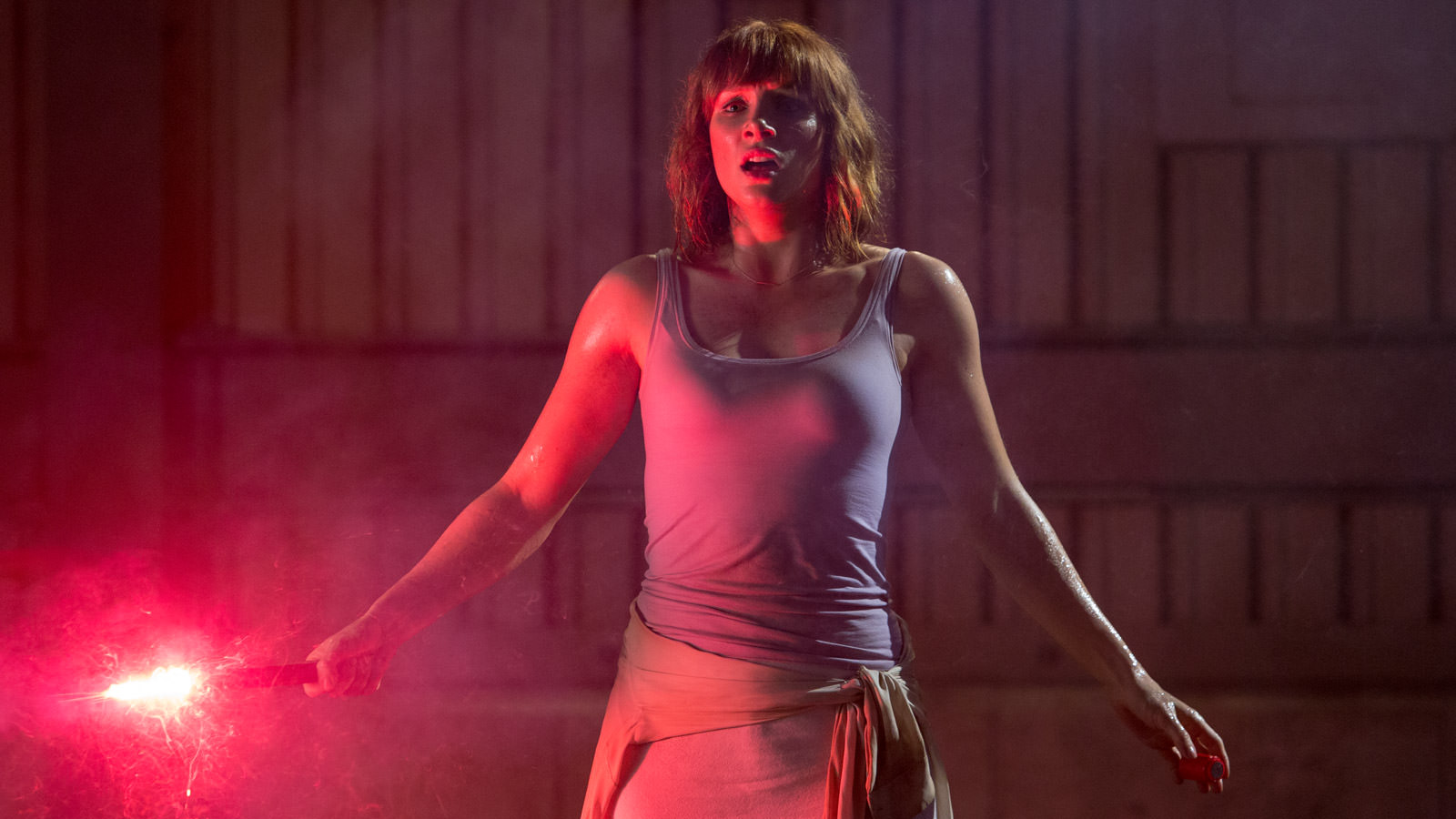
Jurassic World


*SPOILERS, OF COURSE!*

The park is open and ticket sales are huge, beyond all expectations to be honest, so, why grumble, aye? I'm sure nobody at Universal is kicking themselves saying; "Gah, if only the characters had been stronger!" etc.

Maybe in the future people will also look back upon Jurassic World with some fondness, who knows? Though seeing how much of a re-tread it is of Jurassic Park and still how beholden it is to a lot of that film's narrative and set-pieces I can't imagine how it could ever be held up all of its own. It will always be a sequel, perhaps the best sequel, but always a lesser movie than the original.

Which is a shame because the potential was there for something a little better, something that took its cues from what really worked about the first film:

Characters and conflict.

You've got Dr. Alan Grant (Sam Neill) not getting on with kids being forced to look after two kids.

You've got Dr. Ian Malcom (Jeff Goldblum) being a flirty fellow and taking a shine to Dr. Ellie Satler (Laura Dern) who is involved with Dr. Alan Grant.


You've got John Hammond (Richard Attenborough) thinking he can win over the scientists with his technological wonders, but the only one who sees the potential in his endeavours is the "blood sucking lawyer", who later runs in fear leaving two young children to - as far as he knows - die.

Even within Hammond's team there are various conflicts of interest, the old-school ranger Muldoon (Bob Peck) has a cautious, tentative approach, there's something cynical and beleagured about Ray Arnold (Samuel L. Jackson) who clashes with Nedry (Wayne Knight), who seems to rub everyone up the wrong way.

Not to mention how Hammond can't see how a flea circus and a dinosaur safari park are any different, or the brief flash of sexism he displays when it comes to going out to check on Arnold which is called up on by Ellie.

Sure, it's not the most complex film in the world dramatically, but all these little touches serve to make the action more thrilling. When we invest in the characters and the relationship drama the set-pieces impact is increased tenfold.

In fact, some of the best set-pieces in Jurassic Park don't even involve dinosaurs, such as the sequence where Alan and the kids are climbing over a deactivated electric fence whilst - unbeknownst to them - Ellie is working to switch the power back on.

What do we have in Jurassic World?

We've got two kids going to the park to stay with their aunt, she's too busy to really spend any time with them so they're looked after by an au pair, who we don't get to know.

So, why are the kids going to the park without their parents? Well, it's briefly suggested that their parents are getting a divorce, which makes one of the kids Gray (Ty Simpkins) have a bit of a cry and his brother Zach (Nick Robinson) promises to be there for him, and then the whole divorce plot doesn't come up again at all.

Claire (Bryce Dallas Howard) - their aunt - is Jurassic World's operations manager, and is concerned with keeping visitor numbers up, to this extent she's meeting with sponsors about their new attraciton, a genetically engineered dinosaur called Indominus Rex. All this under the guidance of her - generally benevolent - employer Mr. Masrani (Irrfan Khan) who vaguely says things to Claire about being happy and not being such a number cruncher, etc. He is also two days away from his helicopter license.


You see, Claire's attitude is that people are bored with the "usual" dinosaurs, sure, the geneticists discover the occasional new species, but they want bigger,scarier, more teeth. Something to make them look up from their smartphones.

Meanwhile, Owen Grady (Chris Pratt) is training some velociraptors, why and what purpose the creatures serve in the park - or will serve - we're not really sure. Mr. Masrani wants him to look at the Indominus Rex enclosure to make sure it's suitable, so Claire goes to ask Owen to look at it.

Some flirting ensues, well, Owen makes some bawdy remarks because he's such an "alpha male" and it transpires that he was too scruffy on a date they once had and she - because she's all business-focused - made a schedule for their date.

There's also a security guy who wants to use the velociraptors for military purposes, though his villainly isn't gleeful enough to really make any impression.

So, what's wrong...?

I think what I enjoy the most about the first Jurassic Park is that the real problems with the whole dinosaur theme park endeavour stem more from the scientists belief that Hammond shouldn't be meddling with nature than with any overtly functional problem with the park itself.

It's not the dinosaurs that ultimately cause the chaos, it's Nedry's software that he designed to enable him to steal the embryos.

I guess thematically that's Nedry's belief that he can control technology going awry, which causes the park to collapse setting these other technological marvels that Hammond thought they could control loose. It's thematic dominoes.

In Jurassic World Owen (who constantly preaches the importance of understanding dinosaurs and being cautious, etc.) decides that because he saw some claw marks on the side of the compound that the Indominus Rex - a dinosaur that he has no idea what it looks like and what it's capable of - must have escaped, so he, and two other disposables, go into the enclosure to look at the claw marks.


Is this part of any lesson learning that Owen is due to receive later in the film? No, Owen, as a character, is constantly celebrated by Jurassic World as being a "bad ass", and whilst Claire later steps up to the plate and fends for herself it's more a case of her becoming more like Owen than the two of them ever finding some middle.

For the two kids with this distant Aunt they need to see her really come into her own, and this could come across later in the out-running a t-rex whilst wearing heels scene.

A fair bit has been said online about Claire's high heels (most notably in The Dissolve: https://thedissolve.com/news/5927-jurassic-world-high-heels-and-why-wardrobe-matters/ and a decent counter argument in Slate: http://www.slate.com/blogs/browbeat/2015/06/15/bryce_dallas_howard_s_high_heels_are_not_sexist_they_re_the_best_part_of.html), but what I believe Genevieve was really getting at in her article was not to grumble about the high heels per se, but to use them as one illustrative point as to how Jurassic World thinks it can set things up and never acknowledge them or pay them off (illustrated rather brilliantly and humorously in some tweets from musician JME: http://crackmagazine.net/2015/06/jme-saw-jurassic-world-and-he-didnt-enjoy-it/).
The annoying this is not that the film doesn't make sense, it just doesn't really seem to be trying.

More fun could be had if the film had embraced its concepts a bit more, there are loads of great ideas floating around in Jurassic World that it's frustrating to not have them realised.

First up, how about we ditch the military concept completely, at least, let's not dedicate any screentime to it. We don't need this discussed, this could just be a thought in the back of the security guards mind, maybe saved for a sequel which could really be Aliens with dinosaurs.

Also, it's frustrating that we wind up wasting time wandering about the jungle with the lost kids in a sloppy re-tread of tired old beats from the first three films. Especially as the reason for them winding up out in the jungle is pretty ropey, surely there'd be an over-ride for the gyropspheres, y'know just in case a guest was using them to ram into innocent dinosaurs or something? So the control team could remotely pilot them all back to the base of operations.

Secondly, there's no real lead-in as to why Zach would suddenly take his brother out past the security fence, maybe if throughout their visit to the park Gray hadn't seen any action, any excitement due to his brother constantly making him chase girls aorund instead. Finally, due to following a girl who seemed to be into him, they wind up in the gyrosphere and wrestle over the controls, winding up - unintentionally - passing through the hole in the fence and into the jungle?

Or, perhaps, Zach finally sees that his brother is having a terrible time, wants some excitement, so then suggests they go "off road".


However, I would have just preferred it if the Indominus Rex had burst into the gyrosphere area and we never had to trudge around the jungle - outside of the marines vs. dinosaurs elements.

Indeed, the jungle scenes lead us to one of my least favourite moments, an example of really clunky writing devoid of set-up.

The boys find themselves at the old Jurassic Park visitor's centre, overgrown with vegetation, covered in dust and debris. There they discover the old jeeps and suddenly Zach says something like; "Remember how we fixed up grandpa's old car..." and using a convenient nearby recently-crashed vehicle they swap the battery over and now have a fully operational jeep.

I'll accept that perhaps, maybe, if you're lucky, the jeep has no other problems, e.g. a car parked near where I work was sat out, unmoved, for four years and its tyres grew flat and began to become part of the road and shrubbery growing up into it!

But, what bugs me is that these kids - for no reason other than getting them out of there - suddenly know how to fix cars. It is painfully lacking in imagination. Ordinarily in screen-writing you want to write yourself into a corner and think of the best way to get out of it, and the best way is never to have a character suddenly say; "Oh, did I forget to mention that I can fix cars?"
So, don't bother, keep them in the operational theme park please.

Because the best scene in the film is when the flying dinosaurs attack the guests, it's full of malevolent glee and actually has some playful, inventive moments - like Jimmy Buffet's margarita saving cameo.

Though the contrivances that unleash these winged beasts aren't set up particularly well either, they sort of hinge on Mr. Masrani flying the helicopter, though the way we get there isn't exactly satisfying.

We see him walking out saying; "I'm going to fly the helicopter".

Not good enough.

Instead, as it had already been set-up that he was two days away from getting his license, and his co-pilot was last seen up-chucking in a bush, why not have the helicopter team head out. Claire wonders how that's possible as the pilot is sick. We cut to Masrani at the controls. It's a more fun moment, and makes his choice to be there seem that much more foolhardy, sure he's a fine pilot ultimately and that isn't really the issue, but, it just would have been a nicer way to deliver that moment.


Later, Owen continues to be remarkably smart by leading a pack of velociraptors out into battle only to realise he doesn't have control over them when it transpires that the Indominus Rex is part raptor and can communicate more effectively with the raptors - well, up until the plot decides Owen needs to be the alpha again. Additionally, during all of this, Owen instantly sides with the military and starts firing on his own raptors once he doubts their loyalty. Hey, maybe the Indominus is the mum and you're the dad Owen? Couldn't you just work things out together?

Finally, my biggest gripe with the film's set-ups and pay-offs is in the final face-off against the Indominus Rex.

All the raptors have switched sides back to Owen, they're fighting the I-Rex but not doing too well. "We need more teeth," says Gray, and Claire has an idea, she tells them to stay there and runs off, we know not why...

As I sat in the cinema, I was wondering at this moment; "What's been set up that's going to pay off here?"

The reveal that she was unleashing the T-Rex didn't feel like any kind of pay off, in fact, it felt like Zach saying he fixes cars, it was convenient - and it didn't have to be.


Part of the film's plot revolves around Claire saying that guests get bored of dinosaurs quickly, they want something bigger, more teeth, etc. Maybe we need to see a bit of that? Sure, the rest of the park's doing ok, but perhaps the T-Rex exhibit isn't the draw it used to be, maybe when Zach and Ty hurry in they're greeted with a poorly attended scene, maybe even a somewhat lacklustre looking T-Rex, one that's fed up with being a prize pet, no wonder people aren't coming to see it anymore, ah well, poor T-Rex, "That sucks," grumbles Zach, he doesn't even instagram it, onto the next thing.

What we've done there is show that the T-Rex used to be the king, but now nobody cares. Colin Trevorrow the director has said that he wanted the final showdown to be like Rocky vs. Apollo, and, yep, that's what I thought too. Except, Rocky T-Rex needs to swagger into that ring like the former champ everyone's written off, so when he does show up it's like the old guard truly come to give the new kid a whupping.

It needs to be sold as a moment, and a sprinkling of back-story could show that.

Maybe we even get a glimpse of the new marketing that would replace T-Rex hoardings with Indominus Rex images, "COME AND SEE THE NEW RULER OF THE DINOSAURS!" it'd cry.

So when the T-Rex finally comes out it's firstly to chase a human - oh goody, sport - and then, it stops in its tracks, spots the I-Rex, ding-ding, round one...


Jurassic World's bare bones are all in the right order, and whilst they put a good skin on those bones, it actually needed some decorative feathers to really work.

So many strands of the narrative that could be used to improve the tension by building upon the characters - e.g. brother's relationship, sibling rivalries, parent's divorce, maybe giving Owen some acknowledged flaws and a backstory - are just left hanging.

Whilst the brains behind Jurassic World have stumbled upon a formula that for the moment is bringing them huge fortunes, it's a shame that - like the Indominus Rex - it's going to flounder when it stands toe-to-toe with a true great; the original Jurassic Park.

Friday, 4 July 2014

Edge Of Tomorrow


*SPOILERS! OBVIOUSLY...*

There's been a lot of love for Edge Of Tomorrow, a smart, funny, exciting blockbuster that took a seemingly tired concept and made something entertaining and surprising. However there's been a lot of grumbling directed towards the movie's ending, and indeed, when I saw it I felt a tad short-changed too, but I'd built up enough goodwill for the movie by then to forgive it this final stumble.

Interestingly one of the screenwriters - Christopher McQuarrie - has spoken to Film School Rejects about his original take on the ending, either approaching it as a 'downer' in that Cruise kills the big bad alien but stays dead this time, or leaving it with the doubt that anything actually ever happened.

I mean, the film was perilously close from doing a Next* and leaving the audience feeling cheated by having the film reset to before anything actually happened anyway.

My issue with the ending is not because it resets back, it's that it misunderstands the journey of our two main characters: Bill (Tom Cruise) and Rita (Emily Blunt).


It's established earlier in the film that Rita previously had the time-loop power that Bill now possesses. She lost it thanks to a blood transfusion because she lost consciousness rather than - the preferred - dying. She expresses her fury and frustration because she felt like she was close to finding the Omega creature and ending the war forever. Clearly she holds a massive personal grudge against this Omega, and - having become the poster child for this war - she needs to kill it to close her arc.

Bill on the other hand needs to learn about sacrifice, about the heroes of war, the people he used to just run the marketing campaigns about, urging other innocent men and women to sign up and be massacred in their thousands. Through his journey of training and trying again and again he lives out the experience of war, the countless, near pointless sacrifices, that these people make. His goal is to get Rita to that Omega.


So, the film would play out exactly as it does, with our last act beginning when Bill wakes up to find out he's been given a blood transfusion and has lost the power to reset the day.

It continues as he takes his squad to Paris, to where they believe the Omega to be located, and, again, everything plays out just like it does in the film.

Bill and Rita make it into the main lair, where the Omega is deep underwater and an Alpha - along with a few other Mimics - prowl the grounds. As they do in the film, Bill goes off after the Omega and Rita distracts the Alpha.

Bill loses sight of Rita, he hurries towards the pool where the Omega waits, however as he nears he doesn't see the Mimic emerging from the shadows behind him - we do - he's psyching himself up, about to make his final move, and then the Mimic strikes -

Bill turns. It's too close.

BLAM! BLAM! BLAM!

From off screen Rita unloads her rifle into the creature, destroying it.

Bill's bewildered, she hurries forward, pushes him down as another just misses them both, she swings her weapon round, fires, taking that one down too.

"Don't worry," she says, "I've done this before."

He realises that when they were seperated she took the power from the Alpha again. He watches as she performs an incredible feat, dispatching Mimics that seem to keep emerging from nowhere.

"What are you waiting for?"

Bill realises, she's now passed the baton onto him to take down the Omega - honestly I'd rather Rita killed it, but I doubt Cruise would have let himself be so passive in the film's conclusion, but you never know, he's a smart guy when it comes to film - and he does so in much the same way as it plays out in the film now.

Once it's dead everything resets back to before and the film concludes with them sharing a look in the training room.


I think, for my tastes, Rita became a bit too unimportant once we got to Paris and it would have validated her character if she could have got her chance to help in those final moments rather than being killed as a way of giving Bill that final push to succeed and sacrifice himself. I believe it's called being "fridged" in comic book tropes, and it's a shame that it happens to Rita because she's such a great character outside of that.

Anyway, so that's my alternative ending for the film. Not a massive change, but I think - considering how strong the film was until the final fight - a very important one that would have really elevated those climactic moments.

 
*The worst Nicolas Cage film ever, and believe me, there are plenty of contenders. This one nudges out even Ghost Rider by having an ending so infuriatingly insulting that it made me feel like the entire film had stolen my time and spat it into my face.

Thursday, 18 August 2011

Scream 4


CAUTION! SPOILERS APLENTY!

The fourth film in the franchise seemed determined to do a couple of things simultaneously, the first was to atone for the rather poor near-spoofy third film, the second was to somehow act as both a sequel and a reboot of the franchise. Generally I thought the film was pretty so-so, it had its moments, but then all the Scream films do despite their overall success. But not one Scream has managed to match that balance of thrills, jump-moments and smart comedy that made the first film such a breakout hit.

With the opening scene in this four-quel Kevin Williamson and Wes Craven delivered a double-whammy of movies-within-movies that rather brilliantly played upon audience expectations for how a Scream film should begin.

Beyond that it was pretty much business as usual, with Sidney Prescott (Neve Campbell) returning to her hometown, where it all began 15 years ago, to publicize a motivational book about confronting and dealing with fear. Meanwhile there's Sheriff Dewey (David Arquette) still amiably goofing about, having a somewhat frayed marriage with former reporter Gale Weathers (Courtney Cox), and a whole heap of new teen characters and disposable others to be despatched or suspected once the screams start.

The first big problem with the film almost didn't exist, in fact, it was nearly the first thing about the film that really made me sit up in my seat and root for it, and it happens the first time Sidney and Ghostface meet.


It's the usual running around the house routine, but this time Sidney doesn't run, she squares straight up to Ghostface and gives 'him' a hefty kicking, and this new character beat was perfect and exciting. At long last here would be a scream-queen who wouldn't turn tail shrieking when the masked murderer enters the building, sure she's not going to dumbly stroll into an impossible situation, but she's not going to chicken out. This would mean the filmmakers would have to be even more inventive with how the killer gets under Sidney's skin and...

Oh no, they changed their minds, and Sidney becomes her usual self in next to no time.

It made me think about Steve Miner's rather good sequel Halloween: H20, where after all the generally teen-based slash-em-up fair has gone on for long enough, Jamie Lee Curtis' long suffering Laurie Strode decides to face her brother alone, she grabs an axe from a nearby fire safety point and strolls across the deserted schoolyard to where she believes her brother will be waiting, and that spine-tingling John Carpenter theme music kicks in. It's a brilliant moment, it doesn't turn Strode into some sort of 'Stallone-like' superhero, it just reinforces the point that she's been running away for so long and it's time to stop running and finish this.


Just a shame that they ended up brining her back for some more terrible sequels after that. Tsk!

Anyway, firstly, Williamson and Craven needed to maintain the strength of Sidney's character, I mean, she'd come to town to promote a book about facing your fears, and she does very little of that in the film. In fact, by the end scene where the killers are revealed she's pretty much going through exactly the same routine as she did at the end of the first film. Perhaps a deliberate 'remake' nod on the part of the creative team, but not really effective with regards to the overall structure of the franchise, it's a moment that seems lazy, her reaction there more to allow the villain to monologue for a bit.

So, the next biggest problem with the film's script was the ending, and that really matters in a slasher movie like this because essentially, moreso than a horror film, the Scream movies are 'whodunnit' mysteries, the scenes where people are being killed are pretty much totally interchangeable unless it's Dewey/Gale/Sydney being pursued, though it's also a huge shame that the filmmakers didn't have the guts to kill off any of their Holy Trinity.

In the end the film's message is 'originals are better than the remakes', the mastermind behind the killings was Sidney's cousin Jill (Emma Roberts) who wants to be famous - like Sidney - for surviving all the horrible killings, whilst framing her ex-boyfriend Trevor for it all. She stabs Sidney in the stomach, proceeds to mutilate herself and wakes up in hospital with all the press fawning over her miraculous escape.


Now, this is, to some degree, almost a great ending if the following ten minutes didn't happen in which Jill finds out Sidney survived the stabbing, she then goes to Sidney's hospital room to finish her off, only to have the Dewey/Gale cavalry show up, and Sidney finally kills Jill, quipping; "Never fuck with the original."

Sigh.

I kind of liked the ending - ignoring Sidney's whimpering - up to the point where Jill wakes up in the hospital and discovers Sidney survived, and I would have been happier and more impressed by the filmmakers if it had gone either of two ways:

1. Police turn up to the house, paramedics come in and find the bodies, Sidney is pronounced dead in front of Dewey and Gale, who embrace. A paramedic looks up from Jill's body and calls out that she's still breathing. Gale and Dewey accompany her on a stretcher as she's being taken to an ambulance. Dewey says some comforting and goofy things to her, which Jill nods wearily at. Gale, rather opportunistically, asks Jill to promise that she'll give her first interview to her, Jill feebly agrees. She is loaded into the back of the ambulance and just as the doors close she lets a happy little grin escape onto her evil face. The end.

2. The ending is exactly the same as it is, even including Jill waking up in the hospital with Dewey next to her bed. However, he is upset because Sidney died, he tells Jill this, expresses some confusion over the case, his tone is peculiar, a little detached, Jill plays it all angelic and innocent, but she can't help feeling a little confused. Dewey gets up to go, he stops at the door and looks back at Jill half over his shoulder, says; "Y'know, there are certain rules in order to survive a scary movie..." He lets out a little sniff of a laugh before turning on the television set and walking out. Jill sits in the bed, looking towards where Dewey left, but the words from the television enter her consciousness; "Viewers may want to look away, as this footage is quite disturbing." The sounds from the television are replaced with the sounds of the scene in which Jill is smashing herself into furniture around the house in order to get away with murder. Jill's eyes grow wide and worried as she watches, realising that the footage she is watching came from the geeky teen Robbie's headset camera and these images were broadcast live across the internet. Jill moves to leave the bed, but realises she's handcuffed to the frame. The end.

I think Ending #1 would have really pissed off a lot of people, I do love an unhappy horror ending, but I think Ending #2 would have been absolutely brilliant and would have forgiven the film for a number of its lazier earlier scenes. It would have closed the book on Sidney's story once and for all in a unique and dramatically surprising fashion, and I think it would have given the audience a satisfying feeling as they left the cinema. I know people 'want' to see the baddie get killed in an exciting way, but the scene in which Jill attacked Sidney in her hospital room was ridiculous, not least because it completely destroyed Jill's defense.

Friday, 12 August 2011

Captain America: The First Avenger


As always: THERE WILL BE SPOILERS!

I was pretty pleased with Joe Johnston's take on the first Avenger for the most part. I'm a big fan of his under-rated - though cult classic - comic book caper Rocketeer, it's still a favourite gee-whiz adventure flick with some truly exhilirating flying sequences, a decent square-jawed hero, Jennifer Connelly exuding style and charm, a delightfully slimy villainous turn from Timothy Dalton and a host of great supporting characters. That was the film that gave me confidence in Johnston's ability to tackle this 40s set yarn, and his ability to play cheesey patriotism without getting too sickly would be key in making Captain America work for an international audience.

For the most part he succeeds, Chris Evans is great as Steve Rogers, there's a fine supporting cast around him - most notably Stanley Tucci's affecting turn - and the film looks really nice. An early set-piece immediately after Rogers gains his enhanced strength is fun, and the montage in which Captain America is born as an advertising tool to sell war bonds is enjoyably tacky and is a great way to build up Rogers frustration that he is unable to 'stop the bullies' of Nazi Germany.

However, the key problem with the film lies in its book-ending, but there seemed to be a simple way to address this issue that would have enhanced the emotional resonance of the film as a whole.


The film's prologue and epilogue are set in modern times, initially with agents discovering a crashed ship in the Arctic and wiping ice away from Captain America's distinctive shield. Immediately as an audience we know how the film ends, that Steve Rogers will wind up frozen in this wasteland to be thawed out and drafted into the Avengers.

In some ways this makes the introduction of a lot of the characters in the ensuing 'flashback' emotionally redundant, because unless they're all frozen in time they hold no relevance to Steve's life and the flutters of fliration between him and Hayley Atwell's Peggy Carter will ammount to nothing. We do meet Tucci's good hearted Dr. Erskine and, in the film's finest emotional scenes, he delivers the key moral and is ultimately assassinated, dying in Rogers arms and - much like Peter Parker in Spiderman - inspiring the first real test of Rogers' strength. The film using its action as a release off of the back of an emotional punch that finds the audience willing Rogers to catch the Nazi assassin all the more, it's popcorn at its best.

If only the same could be said for the rest of the villain's plot, a wobbly MacGuffin to tie in with Thor isn't given the same prominence as, say, the ark of the covenant in Raiders of the Lost Ark, indeed, it winds up just powering a bunch of laser guns that aren't too threatening really. Meanwhile, in a spirited montage, Rogers travels across Europe happily laying waste to all of Red Skull's weapons factories, but despite this carnage it doesn't really seem to effect production of his super plane where the film's final act takes place.


Perhaps if the set-pieces were centred more around discovering the location of the mysterious factory the film would have more tension, a ticking clock, to uncover where Red Skull was based and what he was building. Instead, for the most part, after glancing at a map Rogers knows exactly where he's based and doesn't hesitate to trash every single lab. By the time we finally get, rather unceremoniously, to that final 'secret' factory, Red Skull and his army are all ready to leave and lay waste to the coast of America.

So, how could this final act be improved? From a narrative perspective I understand the desire to use these montages of Captain America's success instead of a series of dedicated set-pieces in pursuit of Red Skull. The initial factory face-off has some nice moments, including a vertigo inducing walk across a rickety beam and a decent first encounter between Hugo Weaving's villain and our hero, delivering a rather cliched 'We're not so different, you and I' kind of speech.

Later, when scrapping on a train, Rogers loses his best buddy 'Bucky' Barnes (Sebastian Stan), though the moment lacks the same heart-rending effect as Tucci's demise, despite Stan's fine performance, but we needed to see more of the two men's camaraderie both pre and post super serum to really feel for the loss of this friend. But, it is this loss that should have been the film's turning point for Rogers as a character, and indeed should have continued to resonate throughout the choices in the narrative.

Ultimately Rogers will be frozen and wake up 70 years later, all the characters we meet here will be dead from old age at least, so why not use that opportunity to - rather mercilessly - have them killed on screen, in front of Rogers to confront him with the horrors of war in a way he couldn't have imagined, a display of reckless hate from Red Skull that would (a) assert him as a truly odious villain and (b) lend a visual reflection of the kind of fatalities that his grand plan would incur; indiscriminate genocide.

It would also give further fuel to Rogers' sacrifice as he takes control of Red Skull's plane and decides to crash it into an icy tomb, for all he knew he would die, and that choice unfortunately doesn't resonate as strongly as, say, George Kirk's does barely five minutes into J. J. Abram's Star Trek movie. If anything the audience may be forgiven for thinking that Rogers will once again rise from the wreckage and make his date with Peggy.


But there shouldn't have even been a date with Peggy on the table as he plowed that plane into the ground, she should have been killed at the hands of the Red Skull prior to the film's final battle, much like the shocking and devastating death of Elizabeth in Barry Levinson's over-looked and wonderful Young Sherlock Holmes. Indeed, that film creates a huge emotional resonance via three key actions:

1. The death of Professor Waxflatter who was Holmes' mentor as a young man.

2. When asked what he wants to be when he grows up, Holmes replies solemnly staring out of the window towards Elizabeth that "I never want to be alone."

3. Elizabeth is shot stepping in the way of a bullet meant for Holmes.

It gives the final battle between Holmes and his nemesis so much more wallop and goes a long way to establishing the emotionally unstable and cold detective of Sir Arthur Conan Doyle's novels brilliantly - even if it does take many liberties with the chronology of those books!


If Rogers had lost everything in the 40s there would be no reason for him to live other than to put an end to the 'bullying' and he would do this in a powerful gesture by giving his own life to protect the innocent, it would have been a spine-tingling moment and probably punctuated with a sentimental (though probably tear-jerking) shot of Rogers looking towards the picture of his lost love that he kept stowed in his compass. Boy, I'm welling up just imagining it.

This would make Rogers' confusion and anger over his actually surviving the crash even more shocking for him, but his desire to do whatever it takes to avenge those who are wronged and prevent another villain like Red Skull from rising even more palpable.

Unfortunately what we're left with is a decent blockbuster that feels more like an extended preamble to The Avengers than a complete film all of its own.